
Gehry's Kitchens
The architect as kitchen designer

Thanks for reading. I’m writing more about kitchens this year, as a reprisal of the 2021 podcast series and zine I made (Kitchens!) This post is free to everyone, but paid subscribers help fund future projects like this.
After Frank Gehry died, Phin Harper tagged me in an Instagram story. “Frank Gehry’s 1976 kitchen always gave me tingles. RIP,” they wrote. “I feel @dearlovelucy would approve.”
I do. “I love this kitchen!” I reply. I’m not alone. It’s populated my Pinterest boards, filled up my bookmarks and always seems to crop up in different corners of the internet no matter what I’m searching (kitchens, always kitchens). “Anyone else need this kitchen?” a recent Instagram post sharing Tim Street-Porter’s (yes, Janet’s ex-husband) now legendary image of the room demands.
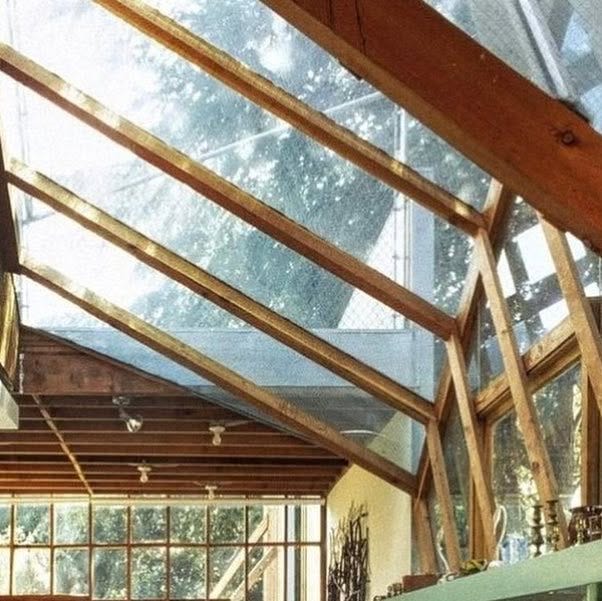
The kitchen is flooded with an almost incomprehensible amount of natural light, thanks to the timber-framed glass roof which arched over into the front wall too. There are two ‘floating islands’: butcher’s blocks with cabinets beneath on castors so they can be wheeled around the space. The kitchen is narrow by contemporary celebrity architect kitchen standards but not overly so for a normal house. You could walk around the islands easily, even when they were wheeled into the middle of the room. There’s plenty of room to reach over and grab an ingredient out of the glass-fronted cabinets running along the back wall. The tiles and cabinets are mint green. I didn’t realise until later that this was a throwback; a 1950s kitchen in a late 1970s house, or really in spirit a prescient 1980s house, all sculptural angles and ostentatious metal embellishments. When I first saw the kitchen, I didn’t know anything at all about the house.
I spent a while searching online for different angles of the kitchen. Sometimes one of the drawers underneath the backwall storage cabinets is half pulled out, which a Reddit commenter suggested was deliberate and “classic Gehry”. Zooming in, I noticed that the countertop is grouted tile, an American convention rarely seen in the UK and which I personally think looks cool, but which, the clean freaks of the internet agree, poses an insurmountable hygiene issue. There’s a range cooker with a gas hob and what appears to be six separate ovens.
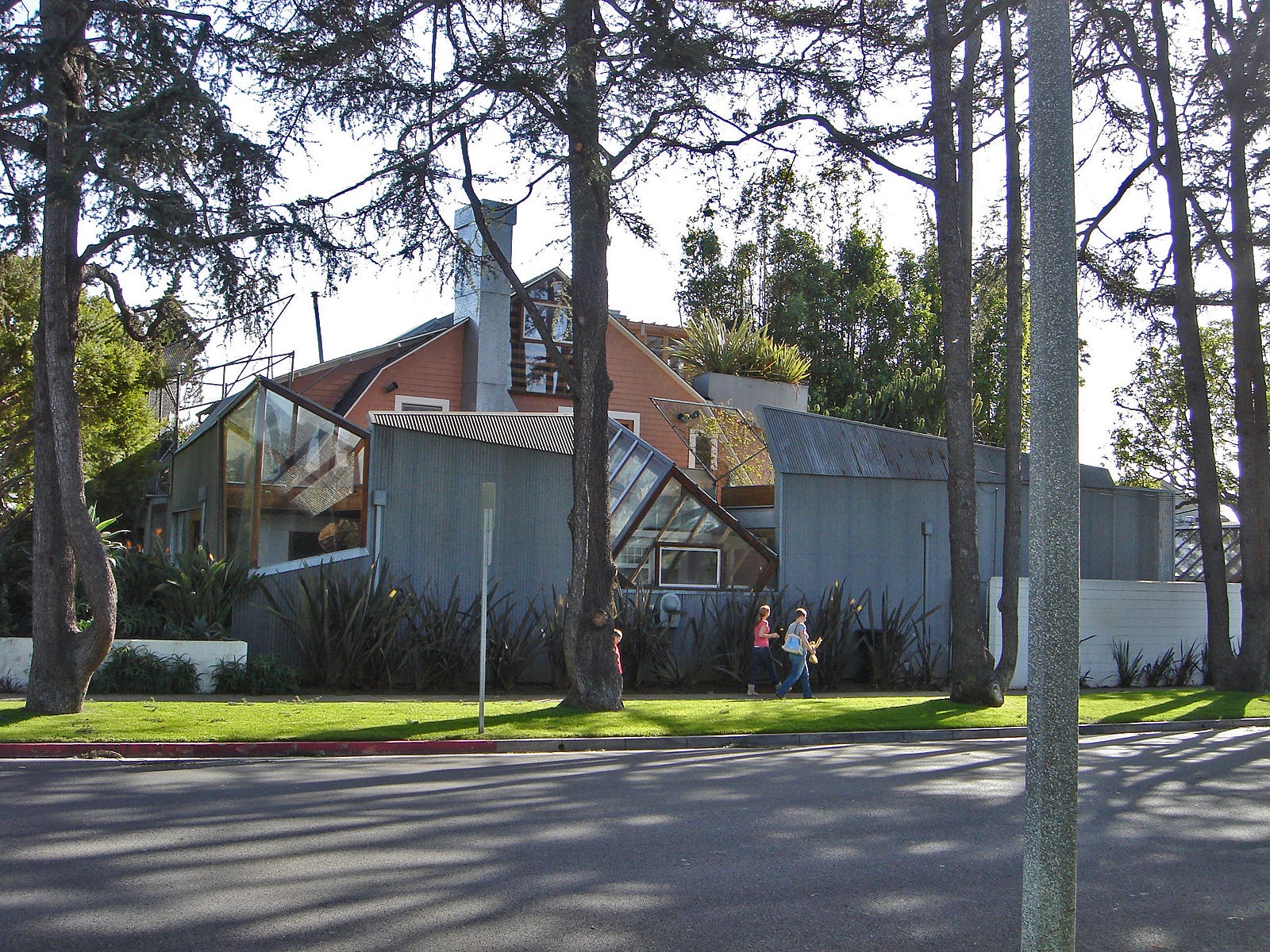
I learn that the kitchen is housed in the kind of exoskeleton that Gehry constructed around the existing pink Santa Monica bungalow. I don’t know why bungalow in the US seems to refer to houses with multiple floors when in the UK it specifically means a single-storey dwelling, but we move past it. From the inside, the natural light flooding through the timber frames made the house seem like a mid-century dream, like the kind of untouched 1950s mansions that pop up on my Instagram feed from specialist LA estate agents, but from the outside it’s a beautiful monster. The original Dutch colonial house is still visible in glimpses but peaks of corrugated steel and leaves of chainlink fencing shield most of it from view, with the kitchen windows front and centre like a greenhouse that blew in during a Wizard of Oz-style twister and lodged itself at a jaunty angle.
I suddenly notice that one of the images I’ve pored over appears to be flipped in comparison to the previous ones, with the sink and the cooker and even the neighbouring dining nook all in a different configuration. I feel myself gently spiralling as I try to click through countless Google images on my train’s intermittent wifi, desperate to work out whether the image has been artificially mirrored for some reason. Or worse…generated by AI somehow?? That would certainly circumvent the copyright infringement anxiety I’ve experienced trying to decide how to include images in this post.
Eventually I stumble across what feels like a trusted source.
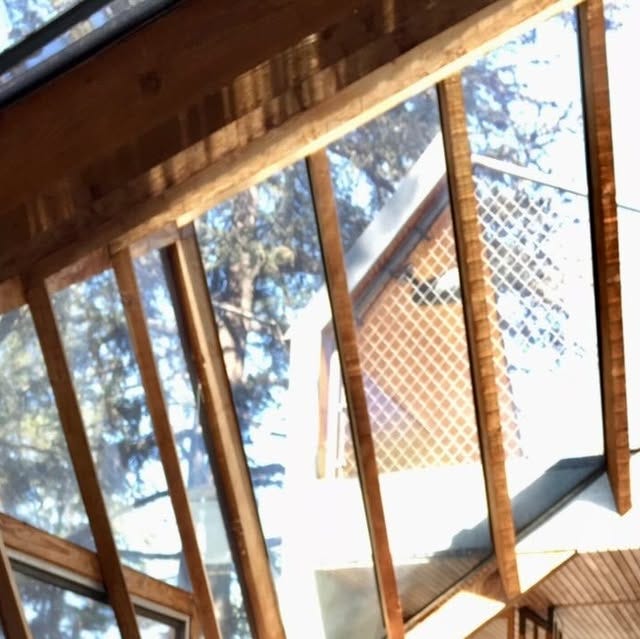
When Gehry died, the architectural critic Edwin Heathcote posted a picture he’d taken of him in the kitchen on an unspecified date. In this photo, the cooker wasn’t just in a different place from Street-Porter’s photo, but was clearly an entirely different model and type. Of course! The kitchen had been renovated since its construction in 1978! It hadn’t remained preserved in aspic all of that time. In Heathcote’s image, though it is hard to see in the bright light, there’s little trace of the mint green that was once such a signature of this kitchen - and still is in its immortal life online. The cabinets and tiles appear to be white. There’s no sign of the floating islands. And - perhaps mostly interestingly - the controversial floor has been replaced, or at least covered, with tiles.
In the original kitchen, clearly visible in certain photos, Gehry retained the driveway asphalt on which he built his bigger Russian doll of a house to envelop the original. This seemed in keeping with the aesthetics of the neighbourhood hardware store present throughout the project, most notably chain link fencing. Gehry was fixated on the chain link, which he employed intentionally as a comment on how modern building materials are used thoughtlessly and people react accordingly. Everyone hates chain link, including Gehry’s psychotherapist, who thought the chain link obsession stemmed from unhealthy processing of anger issues rooted in a difficult childhood, and begged him to drop it. The neighbours famously hated the Gehry residence so much that they threatened to sue. They failed, and then they presumably also hated him for the tour buses of sightseers who began to turn up regularly on the doorstep. Even now multiple YouTube videos show the POV of people practically climbing the fences to film the exterior of the house, which feels a step too far.
The conventions of the kitchen’s design feel different once you know what the outside looks like. Not in any expected way an aspirational residence of a ‘starchitect’, but somewhat of an outlier of soft domesticity in a bold, spiky statement of a house. If the house is a Deconstructivist icon, what is the kitchen? A Trojan horse constructivist rebellion? The original 1950s styling almost feels ironic: the chain link casting criss-cross shadows onto the pastel tiles. I wonder how often Gehry’s kids scraped their knees on the asphalt floor.
I love reading about architects’ kitchens, the ones they design for themselves, without client budgets. There isn’t that much publicly available information on them; no matter how hard I trawl the same ones come up, like Lina Bo Bardi’s Casa de Vidro. Maybe it’s sexist to assume that an architect who is also a woman can take more credit for the design of a kitchen that is both notably beautiful and demonstrably functional. But I don’t know that it’s simply a coincidence that the prevalence of men in architecture exists in inverse proportion to the number of famous domestic kitchens attributed to them. I love that Gehry thought that the kitchen was worthy of his time and energy. He understood that this space could be beautiful and significant.
It’s interesting, though, this unassuageable attribution of the kitchen to Gehry and Gehry alone, when the only reference I can find to him cooking is various instances of him describing the matzo brei he liked to make. He crumbled the matzo underwater before frying them with the eggs, he explained to his old friend Ruthie Rogers on her podcast. We can only speculate who cooked the rest of the household meals in there. Perhaps his wife, Berta, who he bought the original house with, or perhaps their children as they grew up. What did they make? Did Berta specify any of the kitchen’s original fittings, or design the colour scheme? Part of me is willing to overlook these omissions, be content in the assumption that Gehry thought the kitchen was a space worthy of design, of his attention.
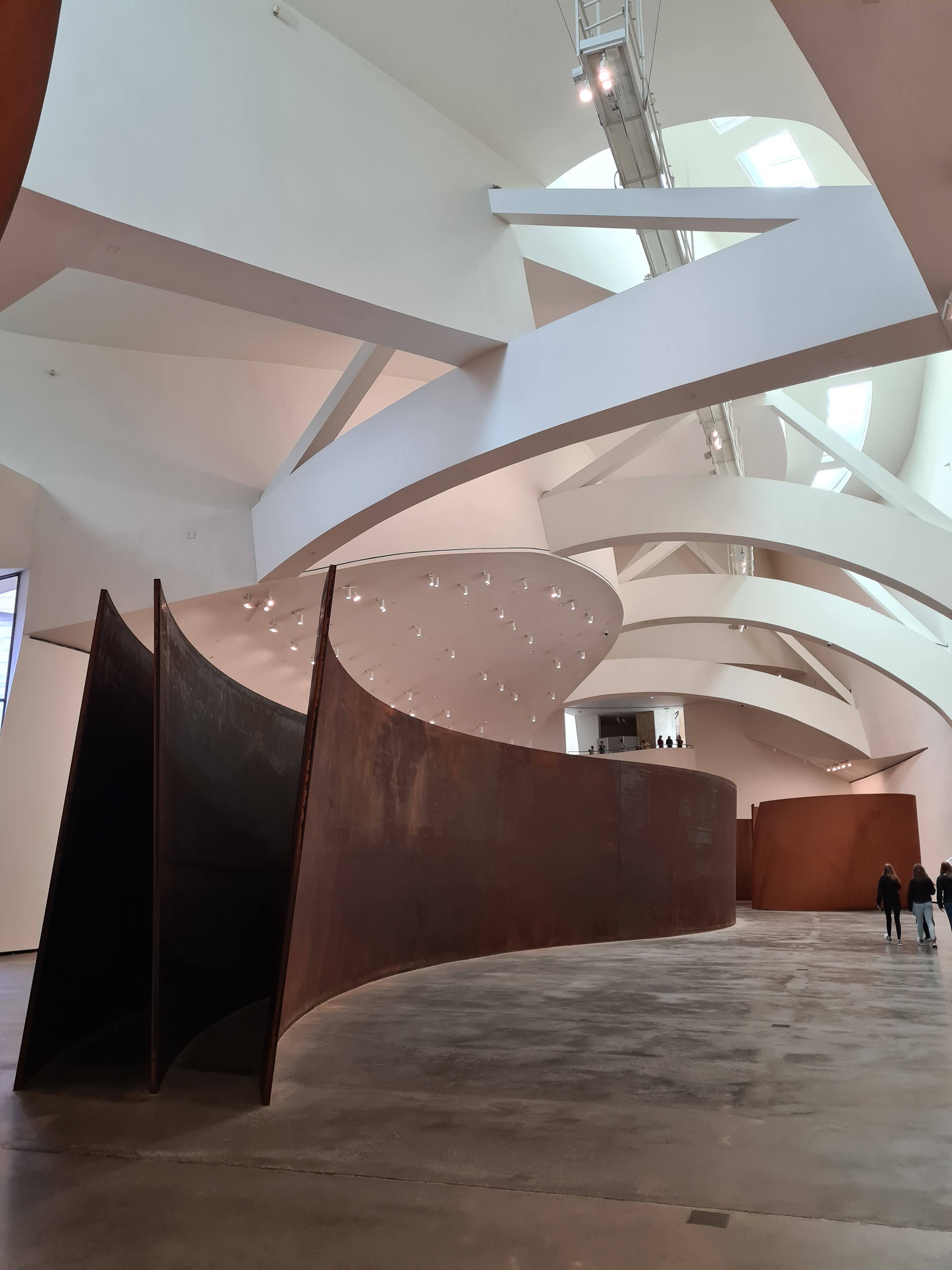
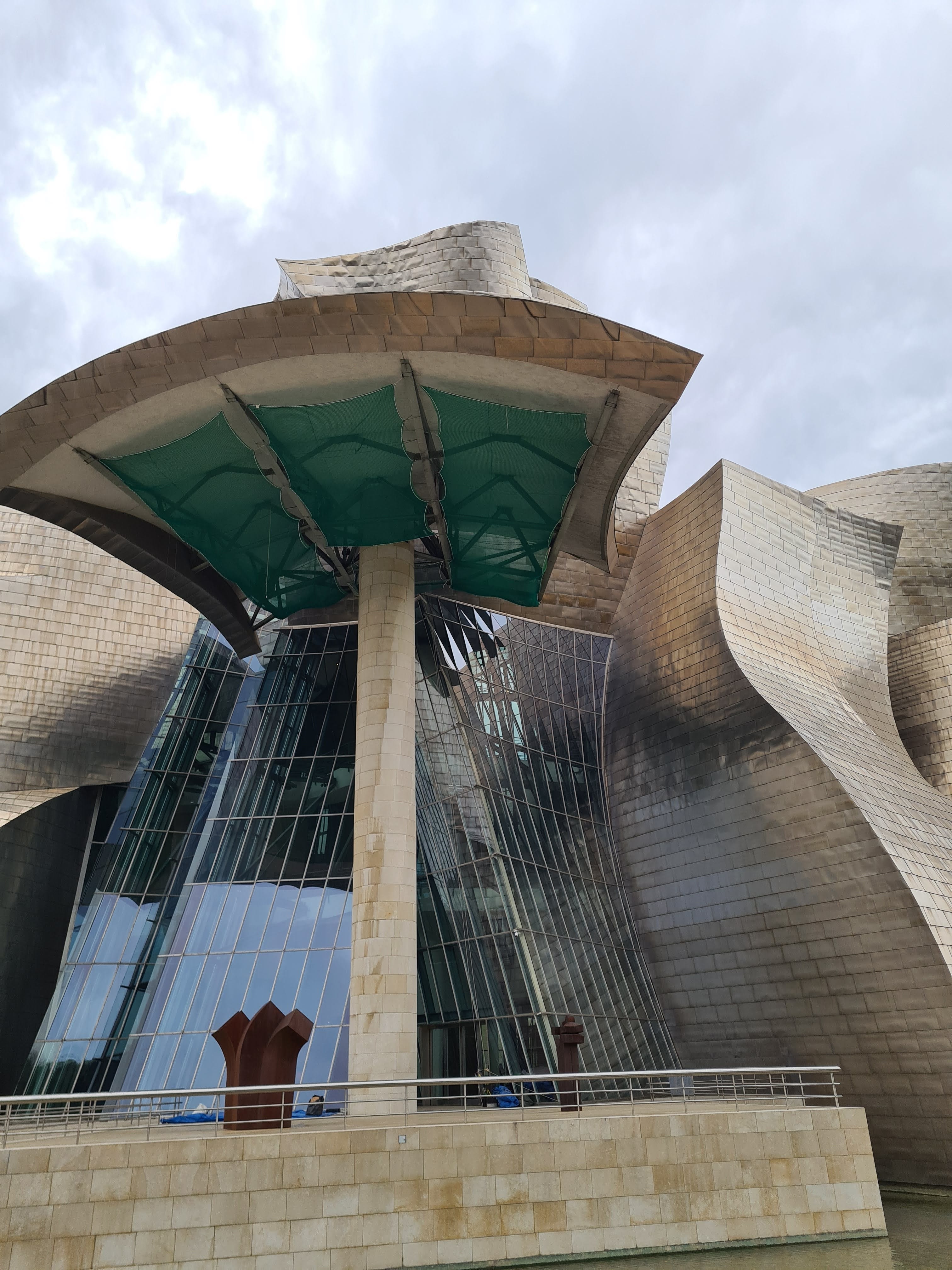
At the Guggenheim in Bilbao, the building that launched Gehry into the stratosphere of fame, I stood inside one of the vast bronze mazes of Richard Serra’s The Matter of Time, listening to the audio guide on my phone. On it, Serra’s gentle deadpan dismissed architectural forms where unconventional shapes were ornamental not structural. I raised my eyebrows. The Guggenheim building is deeply unconventional. Its peaks certainly aren’t structural in the truest sense. But wouldn’t that be dull, for all architectural features to have a functional justification?
Little did I know that this was the tip of the iceberg when it comes to Serra and Gehry’s professional - and emotional - tension. On a two-part Gehry special of CBC’s Ideas, they play a clip of Serra where his scorn blisters towards Gehry’s belief that his architecture was art. “You can’t have art with plumbing!” he splutters. “Art is purposely useless. That makes it more free.” By Serra’s assertion, a kitchen cannot be art: way too much plumbing.
It’s not been written about as much, but Frank Gehry built another house for himself, also in Santa Monica. It was completed only in 2019, when he turned 90, and it was here that he lived most recently with Berta. Paul Goldberger wrote in Architectural Digest: “They continued to be so happy in their old house that they were not sure they really wanted to move, however sensible the idea might be.” It’s a much grander building, though with elements of what he called the “dumb little house” that helped make his name: most recognisably timber-framed windows jutting out of the gabled peaks of the roof, which is made of sheets of corrugated metal. Sam Gehry, who was by this time working as an architectural designer at his father’s firm, ended up designing the house with Frank and so they worked together on the project with its bold interiors, including the kitchen.
Have you ever seen this kitchen? I suppose it’s had about 40 fewer years to enchant the public imagination, but I was surprised when I stumbled across an image of it. If this kitchen had autoplayed on an Open Door video I would have assumed it belonged to a young rich actor working with a hot interior designer; I could practically see them on camera showing AD around the kitchen. Their feet would tread lightly across the bright custom Granada tiles: red and blue triangles repeating like a quilt. They would pause in front of a lacquered Douglas Fir plywood cabinet, perch in one of the high director’s chairs at the island. Gesturing to the vast stainless steel expanse of the Wolf range and extractor hood [previously unknown to me but retailing conservatively at five figures] and gazing affectionately at the curved pasta tap that matched the sink hardware, they’d talk enthusiastically about how they loved to host, even though it’s only the household staff who ever cook in this room.

To me, Gehry’s only obvious presence in the room is the kettle he designed for Alessi nesting coyly on the hob, its suggestive marine curves contrasting the dramatic angular birds of paradise flowers in a vase on the island.
To encounter this kitchen, and his previous kitchen side by side is to meet two different people and I feel unsettled when I first see this picture. A part of me refuses to accept this is the progression from the original Gehry kitchen, its onward direction of travel. But when I learn it was designed as a family room with Sam, and the floor tiles were a special request from his mother, I warmed to it. Perhaps this is the kitchen the Gehrys wanted all along.